309. What successful founders and senior executives have in common
Jun 24, 2026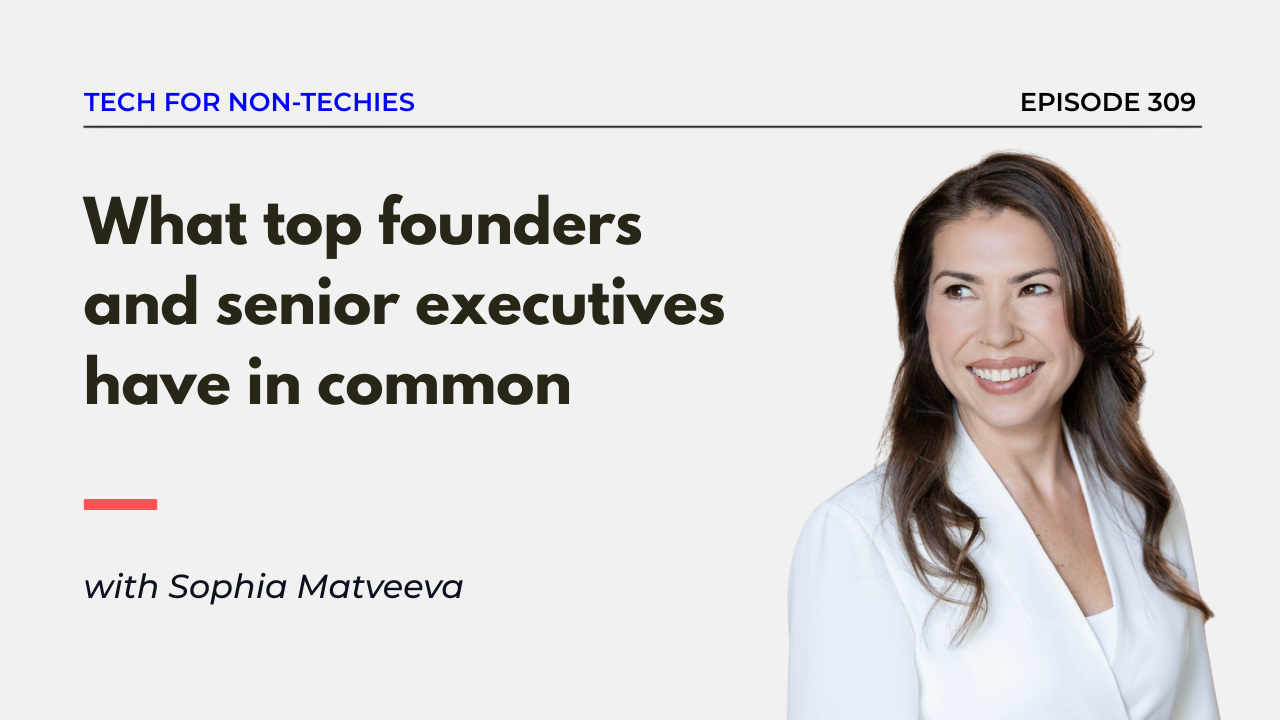
Most corporate leaders say they want innovation. What they actually reward is the opposite.
And then one day — usually the moment someone gets promoted to the top — the rules change.
Suddenly you need vision, ideas, creativity. Nobody told you that was coming. Nobody taught you how.
Founders know this feeling from day one. The pressure to create something new, with limited resources, no roadmap, and no safety net.
The skill that gets both of these people through that moment has a name. It's called product thinking. And if you haven't heard of it — you're almost certainly already doing it. You just don't know it yet.
In this episode:
- Why innovation was never everyone's job inside corporations — and what changes when you reach the top
- What product thinking actually is and why it's now a non-negotiable skill
- Why founders and senior executives are solving the same problem from different directions
If this resonates and you want to bring this thinking into your organisation, book a call here https://calendly.com/sophia-matveeva/new-meeting
Timestamps:
- 00:00 - Introduction: The wall every ambitious person hits
- 02:21 - Personal updates: Becoming a mother and entrepreneur
- 04:40 - Why corporate leaders and investors are tuning in
- 06:10 - The dirty secret: Senior leaders are suddenly asked to innovate with no training
- 09:25 - Why founders are the ultimate product thinkers
- 10:40 - What is product thinking and why it matters now
- 13:00 - Teaching lawyers to think like product managers
- 14:11 - Product thinking is what the CEO actually does
- 16:31 - Who this show is really for and what you'll learn
Free AI Mini-Workshop for Non-Technical Founders:
Learn how to go from idea to a tested product using AI — in under 30 minutes.
Get free access here: https://www.techfornontechies.co/aiclass
Follow and Review:
We’d love for you to follow us if you haven’t yet. Click that purple '+' in the top right corner of your Apple Podcasts app. We’d love it even more if you could drop a review or 5-star rating over on Apple Podcasts. Simply select “Ratings and Reviews” and “Write a Review” then a quick line with your favorite part of the episode. It only takes a second and it helps spread the word about the podcast.
Listen to our podcast on:
Transcript:
[00:00:00] Sophia Matveeva: At some point, every ambitious person hits the same wall. The founder staring at a blank page wondering what to do next. Or the senior executive who just got promoted and realized that the rules have completely changed. And the problem looks very different from the outside, but actually it's the same thing. The question is, how do you create something new with limited resources under pressure when nobody has given you a roadmap? And that's what this episode is about.
[00:00:32] Welcome to Tech for Non-Techies. This is a podcast for business leaders and non-technical founders building the future in the age of AI. Whether you've been in business for a hundred plus years and you're looking to modernize, or whether you're building something new, this is the show for you. You'll learn how to come up with new ideas and make them come to life no matter the size of your organization. I've taught tech and innovation at Oxford University, advise companies like Microsoft, and written for the Harvard Business Review. You're going to hear the frameworks and the thinking that I've built and tested and taught at the highest level. And now it's your turn. Let's get started.
[00:01:12] Hello, smart people. How are you today? I am very excited about today's episode because I have updates. So first I'm going to give you a personal update, and then we will get to business. So if you're totally new to this podcast, you might not care about the personal update, so you could just fast forward a bit.
[00:02:21] Personal update: Becoming a mother and entrepreneur
Anyway, so here is the personal update. I am now a mother. This year, in 2026, I became a mummy to a delightful little boy called George, and he's four months now. And honestly, I have never been happier despite, yes, having some sleepless nights. And I really didn't enjoy being pregnant to the point that I didn't want to talk about it to anybody. But that is behind me now. And honestly, it was all worth it. And I would do it again in a heartbeat. And actually, I might. Anyway, combining motherhood and entrepreneurship has actually been really cool. And I was kind of, I mean, I didn't know what to expect, but I've been very pleasantly surprised. I've become a deeper thinker as a result, and I really didn't expect that. So, you know, my thinking and how I see the world has changed. And as a result, I think I am able to see and connect ideas in a better, much more deeper way than before. And so I'm actually quite energized and creative. And I'm working with amazing clients, have a great team, and I even hosted an in-person event on how to become more innovative last month. And that event raised money for charity.
[00:03:16] And so am I some sort of superwoman? I like to think so, but I don't think I am. The key to success is basically having excellent full-time childcare. So I'm like Cardi B. I don't cook. I don't clean. If I had to do these things, I would be absolutely miserable and I would be really, really exhausted. And honestly, this was my plan for years. So, like actually more than a decade ago, I was thinking, okay, how do I build a career where I can have a thriving career, which is rewarding and interesting, and also where I can actually have a family. And so I decided that entrepreneurship was the way to do it because I thought that there would be more elements of control to it. I was a bit wrong on some things. But in general, you know, I am working from home right now, most of the time, going to client meetings. And my baby is with me being taken care of by a wonderful nanny. And honestly, I'm really, really happy with this setup and I'm really proud that I've created a business and a career that essentially is giving me that thing, that vision that I came up with a long time ago. Okay, so that's the personal update. And now, dear smart person, let's get down to business.
[00:04:40] Why corporate leaders and investors are tuning in
You may have noticed that the show intro has changed for this episode. And this is a reflection of you, of my audience. So I originally built this podcast and my company, Tech for Non-Techies, for non-technical founders. And if you have an idea for a tech venture and you're not a developer, this is still definitely the show for you. And I think it's still the only show that really is dedicated to speaking to this audience. But I've been noticing for a while that non-technical founders are by far not the only people listening. So I recently got a message from a hedge fund manager friend of mine saying that he loved an episode. And I know that a partner at a white shoe law firm is also a fan, and a senior leader at a fintech company recently became my one-on-one client after listening to this show.
[00:05:30] So you guys, if you are listening to this, you know who I'm talking about. So hello. Very nice to have you today. And I've been thinking about why are these people listening to a show specifically marketed for non-technical founders? So why is the show attracting corporate leaders and investors? And my view is that ambitious, clever people want to learn about innovation. So how do new products and how do new companies get made? Essentially, how does something get created out of thin air? Like that is just interesting. And then the next thought is, well, if somebody else could create something out of thin air, maybe I could. So some of the listeners, some of you want to use this knowledge to create your own businesses. Some of you want to work with clients in this space, like my lawyer listener, or you want to invent new products or to transform really old legacy businesses. So you want to invent new products and new business lines in an existing business.
[00:06:10] The dirty secret: Senior leaders are suddenly asked to innovate with no training
And if you want to innovate in a corporate, there's something that you may already have seen happen if you're at a very senior level, but if you are working your way to super senior levels, I want you to know about something that happens, which you might not know about and it's not very nice. So basically, you might have heard that corporate leaders say that we want our people to be innovative. And so they say that, but in reality, they reward risk-averse management behavior, right? So this is not new, like you know this already. Here's the bit that you might not know that I want you to be prepared for.
[00:06:52] So innovation inside large organizations was never everybody's job. Innovation belonged to senior strategy people and basically the C-suite and some external consultants that got called in. So that's why you had like a 25-year-old McKinsey consultant telling senior business leaders what to do, which I think is kind of ridiculous. But anyway, everybody else apart from these chosen few was basically a manager told to get on with it, you know, optimize performance, but don't really think creatively. We don't need you to do that. And so corporations, they're not lying when they say they want innovation, but they also want safety. And these things, you know, they're true at the same time. And here's the surprising thing that I want you to know about. So when people get promoted from middle management to senior leadership, they're suddenly asked to be creative. They're asked to be innovative. They're asked to think of new stuff, new products, new initiatives, new ideas. But for years they have been rewarded for maintaining the status quo, for executing, for managing, for optimizing. And then they've reached the top and suddenly they're expected to be creative and to have vision and to innovate. And nobody told them that this was coming. And nobody taught them how to do this.
[00:07:44] And this is actually something that I work with clients on in my one-on-one practice, which is how do you actually innovate? How do you become creative? Anyway, let's go back to the person who just got promoted to senior leadership and they're asked to be creative. Often that person is thinking, well, I haven't been asked to do this for a really long time. I'm not even sure I know how to do that. And this is terrifying because innovation is a skill. And the good thing is that a skill can be learned. Most of the people who are terrified that they don't have it, essentially they haven't been allowed to use their innovation muscle. So it's basically atrophied. So they arrive at the most powerful moment of their career without the tool that they really need most. And this problem is really, really invisible. So this is why senior corporate leaders and investors are listening to the show and signing up to my one-on-one practice to basically hone this innovation muscle. Because when people reach the top of their game, they have to be innovative. And when you're in a leadership position, you just can't get away with maintenance. You need creativity.
[00:09:25] Why founders are the ultimate product thinkers
But here's where the transition to the startup world actually really makes sense. You need to be creative, but you also need to be creative within constraints. Because imagine, okay, let's imagine you're the CEO of a global corporation and, you know, you've got loads of money. But still you have the CFO saying, okay, well, you've got these creative ideas, but how are we going to pay for them? You know, what ROI are you expecting? Do we need to pull money out of something else in order to do this? So, you know, you're basically not a monarch, right? Not an absolute monarch. Or maybe you are. If you are an absolute monarch, let's talk. That would be quite interesting. Anyway, so you still have the CFO asking how to pay for your creativity, and you have your investors wondering about the stock price. So unless you're an absolute monarch, you still have to have boundaries.
[00:10:12] And this is where founders come in. So this is exactly the kinds of problems that founders have always had to solve from day one. And I would argue that this problem is even harder for non-technical founders to solve because there's just a lot of stuff that you can't do yourself. So you have to be really scrappy about how you get help from people. How do you incentivize developers that are really good when you basically don't really have much money, but you have to get your product to scale? So a founder has no choice but to be innovative. They need to figure out what new product they're going to build. They need to figure out how to build it in the cheapest, quickest way possible. They will need to figure out how to get their first customers with the lowest possible marketing spend. And I have done all of these things, and this is very stressful. This is really hard, but it's when you go through this really stressful product cycle, say product creation, product launch, product scale, when you go through this, you basically have to become the most capable version of yourself.
[00:10:40] What is product thinking and why it matters now
And actually, you know, going back to my earlier point of becoming a mother and being an entrepreneur, I actually think I have now become an even more capable version of myself than I was before because, you know, I'm taking care of a business, I'm working with clients, and I'm also keeping a very, very small person alive. And I'm like, I did not know I had that inside of me, but hey, I do. It's amazing. Anyway, so when you take on new challenges, you basically grow into them. And this kind of pressure, the pressure of creating something new, launching something new, scaling something new, charging for that thing, that pressure produces a specific kind of thinking. And that is a specific set of skills. And those skills now have a name in corporate life, and that is product thinking.
[00:11:28] And product thinking is not just a startup concept anymore. It is a leadership concept. And if you've never heard of it, I'm going to explain it now, so buckle up. But I suspect that because you've been listening to this podcast, you're actually very likely using product thinking. You just don't know about it. And now we can give it a name so you can tell people that this is what you're doing. And you can also encourage them to do the same thing. And obviously encourage them to listen to the show so they can learn what it is and how to do it.
[00:11:48] So what is product thinking? Product thinking is not just about how to make things. Like this is important, but it's only one part. And yes, we do cover this on the show. It's also about what to make. So you have a bunch of options about what you could do, about how you could invest your time, your money, your efforts, and you've got to choose one. So how do you choose that one? That's also product thinking. It's also about staying relentlessly connected to your customer. So what does the customer actually want? What does the customer need? What do they really need as opposed to what they say they need? It's so obvious in startup land, but I find that in corporates people kind of can lose sight of the customer because often, you know, people start prioritizing what looks good on an internal deck, or what board members are asking you for, or what investors are pushing you towards. And actually in startups, when investors are pushing you towards something really stupid, it can be really, really hard to resist. I may be speaking from experience. Anyway.
[00:12:44] Product thinking is also about launching, it's about learning, it's about iterating rather than waiting until everything is perfect before you show anybody anything. So it's about creating something, creating a test product, maybe using AI to create a test product, running a small test group and then figuring out what to do next. This is product thinking. But another thing, super, super, super important. Product thinking is also about money because you gotta make sure that people get paid. So you have to make sure that what you build actually gets used, paid for, and eventually becomes profitable. And yes, if you're working in the tech innovation space, profit is not usually going to come immediately. Like you need to do a bunch of experimentation, but you are aiming towards making a profit. Like this is business, this is what you're supposed to do. And product thinking is what separates leaders who can genuinely innovate from those who can only approve somebody else's PowerPoint.
[00:13:00] Teaching lawyers to think like product managers
And this is why what I've been seeing is that people who are not immediately seen as startup innovators, they are coming to the show, they're listening, and they want to learn and actually are hiring Tech for Non-Techies to learn the skill set so they can succeed in their careers. So actually, for example, this year at Tech for Non-Techies, we created a training for lawyers who work with tech companies and with venture capital clients. And the crux of this training, the most important thing, was to teach them how tech products get built. So, how does an app get built? How does an algorithm get built? And how do the people who build these products, how do they measure success? And literally, this is super important because this is what product managers and tech startup CEOs are obsessed with. And venture capitalists, especially at the earlier stages, they're really, really obsessed with looking at the product and looking at product metrics. So we taught this to lawyers because they needed to have product thinking in order to understand how their clients are thinking. So essentially they could be good strategic advisors to their clients.
[00:14:11] Product thinking is what the CEO actually does
And if you're a corporate leader, product thinking, if you actually think about it, it's literally what the CEO does. So it's kind of like what I was saying about innovation. It is being done at companies, but it's usually being done by this very, very selective tier. And product thinking and innovation are basically two sides of the same coin. Product thinking is essentially the methodology to get towards being innovative. So if you're a corporate leader, product thinking is what the CEO does because the CEO works with a team of different people. So if you're a product manager, you're also working with developers, you're working with marketers, you're working with community managers, with analysts, and so on. The CEO is also working with, you know, the CMO, the CTO, the chief people officer, and so on. And these people have different talents and very different backgrounds. And these people will all work together to run a company that makes products that people pay for, right?
[00:15:12] So the CEO is like, if they are effective, they are the ultimate product thinker, the ultimate product manager. They have to stay innovative and they have to create new opportunities as the market changes. And so then, like, well, how do you innovate and create new opportunities? By focusing on the user and their needs. And that is what product thinking is. And this is what you have been learning on this show. So if you're thinking, you know what? I didn't realize that this is what I was doing, but I have been thinking more and more about the users' needs and the customers' needs and pulling people away from, you know, maybe what they've read in the Financial Times and the Wall Street Journal, saying, well, what does our customer actually want? Let's give that to them instead of focusing on some sort of analyst report. Let's speak to our customers and figure out what they want us to do. If this is what you've been doing, then congratulations. You've got the twenty-first century skill set.
[00:16:04] So this is why product thinking, I genuinely believe, is something that you need if you are going to be successful, whether you're in a corporate, whether you're in a services industry, or whether you are actually creating new products at a startup level.
[00:16:31] Who this show is really for and what you'll learn
So this show is for the partner at a professional services firm who needs to understand what her tech and VC clients are actually building. This show is also for the division head who has to bring a new product to market but has never done it before. The show is for the newly senior executive who has just realized that the rules have changed and suddenly they have to be creative and they need a framework and not another think piece. And the product thinking framework that you've been learning here and that we go deeper into with our clients, that's exactly what you need. And also the show is obviously for the non-technical founder who's leading product development, whether they feel they're ready for it or not. So non-technical founders, I still love you. I will always love you. You will be my first. You are my first love.
[00:17:24] So what are you going to get from the show? You're going to learn how to come up with ideas that are worth building. And you're going to understand how to discard ideas because creative thinking, we often, creative people, we often have lots and lots and lots of ideas. And our trouble is often just picking something and sticking to it. You're also going to learn how to turn those ideas into something real because success is not just coming up with ideas. Success is actually doing stuff, right? And you are going to keep on hearing about the frameworks that I've built and tested and taught at institutions like Oxford and Microsoft and that I've written about in the Harvard Business Review. So this is basically really, really good stuff. It's not theory. This is what I have actually practiced myself and what I have shared with my clients. So whether you've been building from scratch or running something that has existed for a hundred years, the questions rather remain the same. What are you gonna build next? Why do you think it's a good idea? How are you going to do it? And this is what the show answers. So stay tuned. And on that note, have a wonderful day and I shall be back in your delightful smart ears next week. Ciao.
Sign up to our mailing list!
Be the first to hear about offers, classes and events